

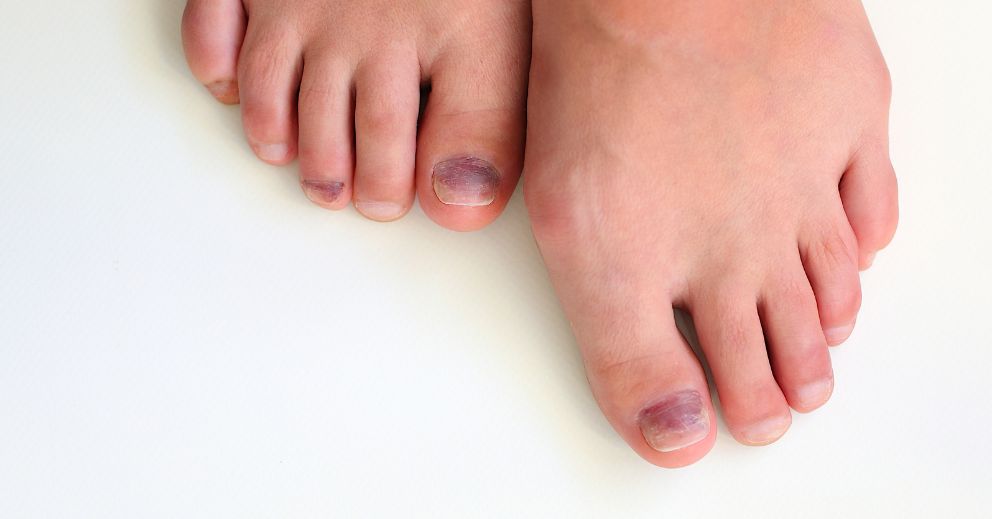
If you’ve knocked a toenail, dropped something on it, or spent a weekend in tight shoes that left your nail bruised and sore, you might notice it changes colour or thickens over time. Then comes the big question: is it simply damage, or has nail fungus developed as a result?
Toenail trauma and fungal nail infections can look very similar in the early stages, and sometimes they occur together. Knowing the difference matters because treating the wrong condition can waste months and allow the real problem to worsen.
Summary: Yes, toenail trauma can increase your risk of developing a fungal nail infection, but it doesn’t always mean fungus is the cause. Trauma can lift or crack the nail, creating warm, damp spaces where fungal growth can occur. This article explains how to tell nail trauma from fungus, why they often overlap, what you can do at home to reduce risk, and when it’s time to see a podiatrist. If your nail is thick, yellow, crumbly, painful, or not improving, Foot HQ can help you get answers and treatment so you can walk comfortably again.
Summarise This Article in ChatGPT
What Counts as Toenail Trauma?
Toenail trauma is any injury that irritates the nail or nail bed (the skin underneath the nail). It can be a one-off accident or repeated pressure over time.
Common causes include:
-
Stubbing your toe or dropping something on it
-
Tight shoes that press on the nail, especially narrow toe boxes
-
Running, hiking, footy or netball where the toe repeatedly impacts the front of the shoe
-
Long days in work boots
-
Picking, tearing or aggressive trimming around the nail
-
A nail that has partly lifted from an old injury
Sometimes the damage is obvious straight away, such as bruising or bleeding under the nail. Other times it develops gradually and appears weeks later as increased nail thickness, a thickened nail, or colour changes.
So, Can Trauma Lead to Toenail Fungus?
Yes, it can. Not because trauma creates fungus, but because it can make it easier for fungus to establish itself.
Trauma Can Lift the Nail
Even a small lift creates a gap between the nail and nail bed. That gap is warm, dark, and often traps moisture, creating an ideal environment for fungal growth.
Trauma Can Crack the Nail Edge
Cracks and splits can allow fungus to move underneath the nail where it becomes difficult for topical treatments to reach.
Trauma Can Weaken the Nail's Natural Barrier
A healthy nail acts as a protective barrier. When damaged, it becomes less effective at keeping bacteria and fungi out, increasing the risk of a toenail infection.
Changes in Nail Care Habits
People often start trimming, filing, or digging around damaged areas. This can further irritate the nail and surrounding skin, increasing the likelihood of infection.
For this reason, nail trauma is often the starting point for many cases of nail fungus, especially when combined with sweaty feet, shared showers, tight footwear, or repeated nail injuries.
Trauma vs Fungus: Why They're Easy to Mix Up
A damaged nail and a fungal nail can both appear:
-
Thickened
-
Yellow, brown, or discoloured
-
Rough or crumbly around the edges
-
Lifted from the nail bed
-
Misshapen
-
Increased in nail thickness
To make matters more complicated, both conditions can exist at the same time. A nail damaged by trauma can later develop a fungal infection, while an existing fungal nail may become more prone to breaking or lifting.
Signs It Might Be Trauma (Not Fungus)
Nail trauma is more likely if:
-
You remember a specific injury or period of wearing tight shoes
-
The nail changed soon after the incident
-
There is a dark purple or black bruise under the nail
-
The nail feels sore or tender to touch
-
Only one nail is affected, particularly the big toe
A traumatised nail often grows out naturally, although this process can take several months.
Signs It Might Be Fungus (Or Fungus Has Joined the Party)
Fungus is more likely if you notice:
-
The nail gradually becoming thicker and more discoloured over time
-
Yellow, white, or brown patches spreading across the nail
-
Crumbling or powdery debris underneath
-
A nail that remains lifted and does not reattach
-
More than one nail affected
-
Athlete's foot or other signs of foot fungus, such as itchy, flaky skin
-
A thickened nail that continues to worsen
If the nail has been changing for months without improvement, it's a strong indication that something more than simple trauma may be involved.
What You Can Do After Toenail Trauma to Reduce Fungus Risk
You don't need to panic, but early care can reduce the likelihood of developing a fungal infection.
1. Keep It Clean and Dry
Wash your feet normally and dry them thoroughly, especially between the toes. Moisture encourages fungal growth.
2. Wear Shoes That Don't Press on the Nail
If the nail is tender or partially lifted, give it room. A wider toe box can make a significant difference during recovery.
3. Don't Dig or Cut Into the Nail
Trying to fix the nail yourself can create new entry points for infection and further damage the nail.
4. Manage Sweat
Rotate shoes, wear clean socks, and choose breathable footwear where possible. If you spend long hours in work boots, changing socks during the day can help.
5. Treat Athlete's Foot Promptly
If you notice flaky, itchy skin, treat it early. Foot fungus can spread from the skin to the nails, increasing the risk of nail fungus and toenail infection.
When Should You Get a Nail Checked?
While most nail changes are caused by trauma or fungal infection, some conditions require professional assessment.
Persistent nail changes, unusual pigmentation, dark streaks that don't grow out, or ongoing nail abnormalities should always be assessed. In rare cases, these symptoms can be associated with nail melanoma rather than trauma or fungal infection.
Similarly, recurring infections, severe nail thickness, pain, or a developing ingrown toenail should be evaluated by a podiatrist.
How Foot HQ Can Help with Damaged or Fungal Toenails
At Foot HQ, the goal is straightforward: exceptional results, genuine care, and treatment that helps you get back to walking comfortably.
Whether you're dealing with nail trauma, nail fungus, a toenail infection, or concerns about a thickened nail, our team can identify the cause and recommend the most appropriate treatment plan.
If you've noticed changes after an injury and your nail isn't improving, book an appointment today and get a clear plan to protect your nail health.
Key Takeaways
-
Toenail trauma can increase your risk of fungal infection by lifting or cracking the nail.
-
Trauma and fungus often look very similar and can occur together.
-
Increased nail thickness, discolouration, and crumbling may indicate a fungal infection.
-
Foot fungus can spread from the skin to the nails if left untreated.
-
Persistent nail changes should be assessed to rule out conditions such as nail melanoma.
-
If a nail is painful, worsening, or not growing out normally, a podiatrist can help identify the cause and provide treatment.
FAQ
How long does a traumatised toenail take to grow out?
Toenails grow slowly. A full grow-out can take many months depending on the toe and your natural growth rate. If the mark or damage isn't moving forward over time, it may not be simple nail trauma.
Can fungus start under a nail after it lifts?
Yes. A lifted nail creates a space where moisture can collect, making it easier for fungal growth and infection to develop.
Can nail trauma cause a toenail infection?
Yes. Damage to the nail can weaken its protective barrier, allowing bacteria or fungi to enter and cause a toenail infection.
Can nail trauma lead to an ingrown toenail?
Yes. Following an injury, the nail may regrow unevenly, increasing the risk of developing an ingrown toenail.
Is a thickened nail always caused by fungus?
No. A thickened nail can result from repeated nail trauma, pressure from footwear, ageing, or fungal infection. A podiatrist can determine the underlying cause.
Can skin infections affect the toenails?
Yes. Some skin infections and fungal skin conditions can spread to the nails if left untreated, which is why early treatment is important.
Is a black toenail always trauma?
Often it is, but not always. If you're unsure, the discolouration appeared without a clear injury, or it doesn't grow out over time, it should be assessed professionally to rule out other conditions, including nail melanoma.


Share: