

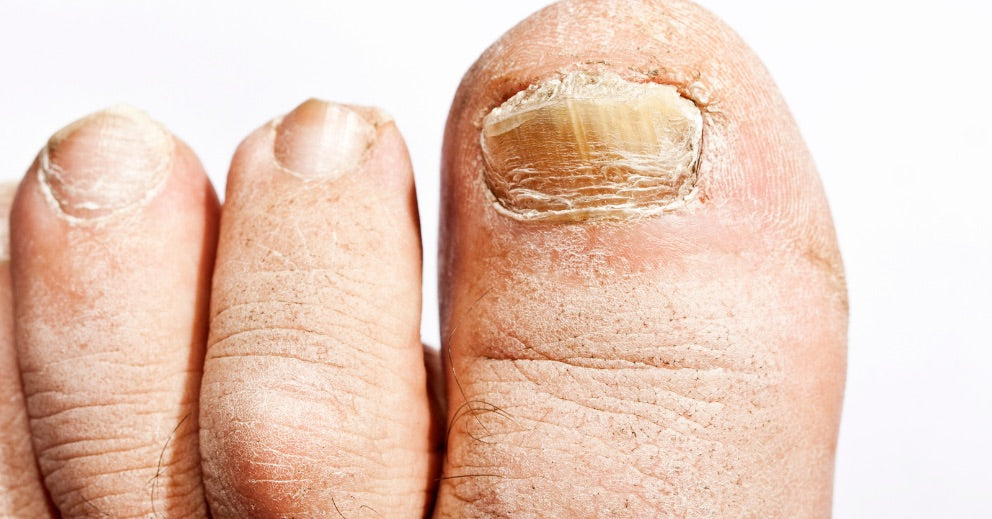
Here's a practical way to think about toenail fungus: treat it like something you can actually manage step by step, rather than a mystery condition that just happens to you. If you've noticed a thickened, yellowish or crumbly toenail and you're wondering whether you've "caught" it from somewhere, or whether you're about to pass it on to your partner or kids, you're asking the right questions.
This guide walks through exactly how toenail fungus spreads, how to check if yours is contagious, and what steps actually reduce the risk.
TLDR: Yes, toenail fungus is contagious, it spreads through direct contact and shared surfaces like showers, pools and towels. The good news is simple hygiene steps and early treatment can stop it spreading to other toes, other people, or back to you after treatment.
How Toenail Fungus Actually Spreads
Toenail fungus, known clinically as onychomycosis, is caused by tiny fungal organisms called dermatophytes. These thrive in warm, moist environments, which is exactly why feet are such an easy target. They don't need much to take hold, just a bit of trapped moisture and a small break in the skin or nail.
Direct Contact Transmission
Skin-to-skin contact is one of the more obvious ways it spreads. Sharing a bed, walking barefoot around the house, or even close contact during activities like sport can transfer fungal spores from an infected foot to a healthy one.
It's not usually instant. The fungus needs the right conditions, warmth, moisture, and a bit of time, to actually establish itself on a new nail.
Surface and Object Transmission
This is where most people actually pick it up. Fungal spores survive happily on damp surfaces for quite a while, which makes the following common culprits:
-
Shower floors and bathmats, especially shared ones
-
Swimming pool decks and change room floors
-
Nail clippers, files and other pedicure tools
-
Socks and shoes, particularly if they stay damp
-
Towels shared between family members
Nail salons can also be a source if tools aren't properly sterilised between clients. It's worth asking your salon how they clean their equipment if you're a regular.
A Step-by-Step Way to Check If Your Fungus Is Spreading
Rather than guessing, it helps to work through this in order. Toenail fungus doesn't always look the same from toe to toe, so a quick systematic check tells you more than a glance.
-
Look at the nail colour. Healthy nails are pale pink, affected nails often turn yellow, white or brownish.
-
Check the texture. Fungal nails tend to thicken, become brittle, or start crumbling at the edges.
-
Smell the area. A mild, unpleasant odour can be a sign of fungal or bacterial involvement.
-
Compare both feet. If more than one nail is affected, or it's spread since you last checked, that suggests active progression.
-
Check for skin changes nearby. Athlete's foot often travels alongside toenail fungus and can indicate the infection is spreading across the foot, not just the nail.
If you tick several of these boxes, it's a good time to get it looked at rather than waiting to see what happens.
Who's Most at Risk of Catching It
Anyone can develop toenail fungus, but some people are more prone to it than others. Knowing your risk level helps you decide how cautious to be.
Lifestyle and Environmental Factors
-
Frequent use of public showers, gyms or pools
-
Wearing closed, non-breathable shoes for long hours
-
Sweaty feet or a tendency toward excess moisture
-
Sharing footwear, socks or nail tools with others
Health Related Risk Factors
-
Diabetes, which affects circulation and immune response
-
Poor circulation generally, common with age
-
A weakened immune system
-
Previous nail injury or trauma
-
A history of athlete's foot
If any of these sound like you, it doesn't mean you'll definitely get fungal nails. It just means it's worth being a bit more diligent about foot hygiene.
Practical Ways to Stop It Spreading in Your Household
Once fungus is confirmed in your household, the goal shifts from prevention to containment. The steps here aren't complicated, they just need consistency.
Daily Habits That Make a Real Difference
-
Dry feet thoroughly after showering, especially between toes
-
Wear thongs or shower shoes in communal bathrooms and pools
-
Avoid sharing towels, socks or shoes with others in the house
-
Rotate shoes so each pair gets time to fully dry out
-
Use your own nail clippers and files, not shared ones
When Treatment Becomes Necessary
Mild cases sometimes respond to topical antifungal treatments, but thicker or longer-standing infections usually need a more targeted approach. A podiatrist can assess how deep the infection sits in the nail bed and recommend treatment that actually matches the severity, rather than a generic over-the-counter product.
Left untreated, fungal nails tend to get thicker and more brittle over time, which makes them harder to treat and easier to spread to other nails. Catching it early genuinely makes the process simpler.
Toenail Fungus: When Should You Seek Treatment?
Discoloured, thickened or brittle toenails can be signs of a fungal nail infection. While these changes may seem minor at first, fungal infections can persist, spread to other nails and become more difficult to manage over time.
Not all nail changes are caused by fungus, so getting an accurate assessment is important before starting treatment.
At Foot HQ, our team can assess your nail health, identify potential causes and recommend suitable treatment options based on the severity of your condition.
Noticed changes in your toenails? Book an assessment with Foot HQ and get professional advice on managing fungal nail infections.
Key Takeaways
-
Toenail fungus spreads through direct contact and shared damp surfaces like showers, pools and towels
-
Checking colour, texture, smell and spread across toes helps you gauge how advanced it is
-
People with diabetes, poor circulation or sweaty feet are more prone to infection
-
Simple daily habits like drying feet properly and avoiding shared footwear reduce transmission
-
Early treatment stops the infection progressing and makes it far easier to clear
FAQ
Can toenail fungus come back after it's been successfully treated?
Yes, recurrence is fairly common, particularly if the original source of exposure, like damp shoes or a shared shower, hasn't changed. Keeping up good foot hygiene after treatment reduces the chance of it returning.
How long does it typically take for toenail fungus to clear up?
This varies a lot depending on severity, but treatment often takes several months because nails grow slowly. Toenails can take up to twelve months to fully grow out and replace the affected area.
Does nail polish make toenail fungus worse or hide it?
Polish can trap moisture underneath the nail, which may actually encourage fungal growth rather than hide the problem. It's best to let your nails breathe, especially if you suspect an infection.
Is it safe to get a pedicure if I have toenail fungus?
It's best to avoid salon pedicures until the infection has cleared, both to protect yourself from further irritation and to avoid spreading it to other clients via shared tools. Let your salon know in advance if you do decide to go.
What should I do if only one toenail looks affected?
Even a single affected nail is worth addressing early, since fungal infections tend to spread to neighbouring toes if left alone. Early assessment often means a simpler, shorter treatment path.



Share: