

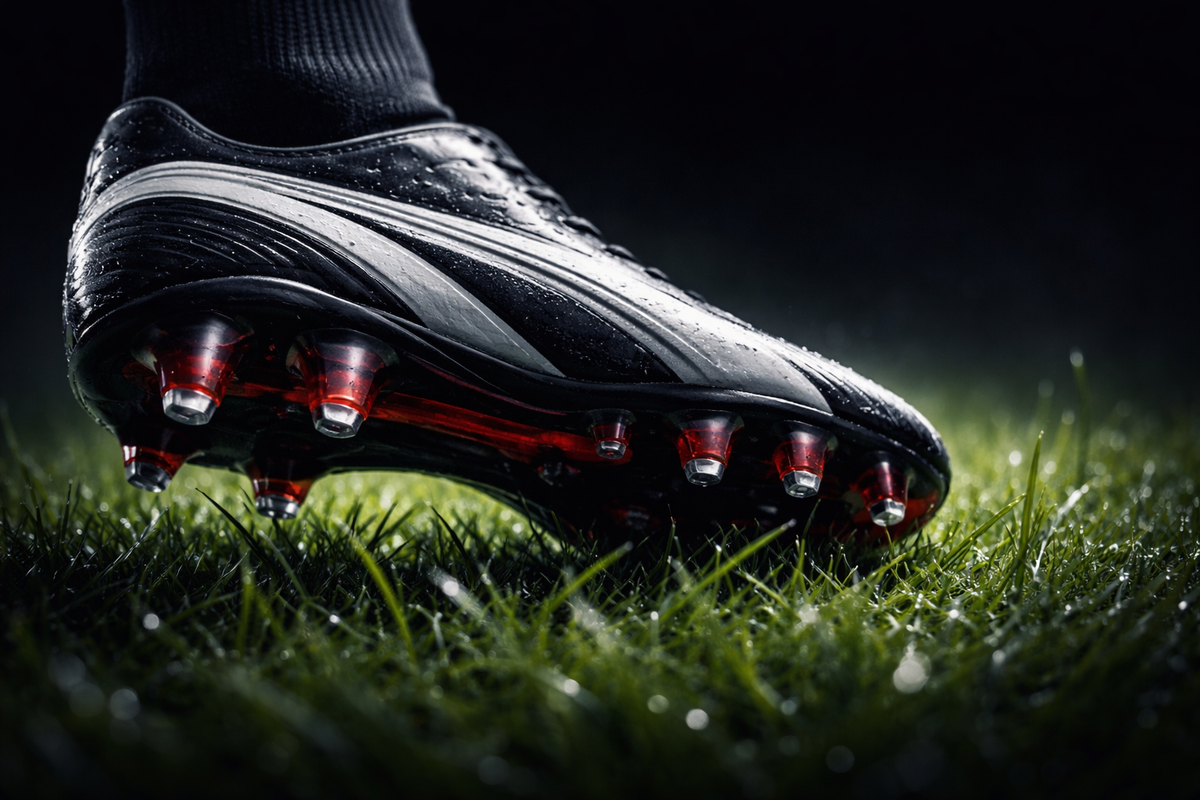
Football Boot Types Explained by a Podiatrist: FG, AG, SG, MG, TF & IN
The clinically-informed guide to choosing the right boot for your surface — and protecting your lower limbs while you play.
At Foot HQ in Miranda, one of the most common and most preventable causes of lower limb injury we see in footballers has nothing to do with a bad tackle or a slippery surface. It's the wrong boot.
Choosing the right football boot for the right surface is one of the most clinically significant footwear decisions a player can make. Whether you're a weekend warrior in a local Sutherland Shire competition, a junior still developing your game, or a serious adult player training multiple times a week, the wrong boot-surface combination can contribute directly to plantar fasciitis, Achilles tendinopathy, anterior knee pain, ankle sprains, and even ACL injuries.
In this guide, our podiatrists at Foot HQ break down every football boot surface type: FG, AG, SG, MG, TF, and IN with clear clinical reasoning behind each recommendation. By the end, you'll know exactly which boot to choose, and more importantly, why it matters for your long-term foot and lower limb health.
Why Choosing the Right Football Boot Surface Type Matters
Football is one of the most biomechanically demanding sports you can play. Your boots are the only point of contact between your body and the ground and every sprint, pivot, cut, and sudden stop sends forces upward through your feet, ankles, knees, and hips.
Wearing the wrong boot type for your surface can trigger a chain of injury, including:
- Plantar fasciitis: aggravated by excessive heel and arch pressure from incompatible stud length
- Achilles tendinopathy: frequently triggered by hard artificial surfaces in boots not engineered for them
- Anterior knee pain (patellofemoral syndrome): caused by excess torsional forces when studs grip too aggressively
- ACL injuries: strongly associated with "stud lock" when long FG studs are used on synthetic turf
- Stress fractures & metatarsalgia: common when boots concentrate pressure into a small contact area on hard ground
- Ankle sprains: a direct result of inadequate or excessive grip from a boot-surface mismatch
Think of football boots as a prescription from your podiatrist. The right boot for the right surface is the right prescription for your body and getting it wrong has real clinical consequences.
FG Football Boots — The Everyday Standard
Best for: Natural grass in dry to slightly damp conditions.
Firm Ground (FG) boots are the most widely used football boot in Australia, and for good reason they're purpose-built for the natural grass pitches that make up the majority of local competition surfaces across the Sutherland Shire and greater NSW.
FG boots typically feature 10–14 moulded studs in a combination of conical (round) and bladed configurations. Conical studs allow for controlled rotational release clinically important for reducing torsional stress on the knee while bladed studs provide sharper directional traction for linear acceleration and deceleration.
Podiatrist's Clinical Take
FG boots are versatile and appropriate for most outdoor footballers on natural grass. That said, from a clinical standpoint, stud pattern still needs to match your individual biomechanics. Players with a history of ACL injury, for example, should lean toward shorter, conical-dominant FG configurations that allow a natural foot release rather than the aggressive grip that bladed studs create. We assess this as part of our sports biomechanical consultations at Foot HQ Miranda.
AG Football Boots — Best for 3G & 4G Pitches
Best for: Training and match play on modern long-pile synthetic pitches (3G/4G astroturf).
Artificial Grass (AG) boots have become increasingly important as synthetic pitches continue to expand across the Sutherland Shire, greater Sydney, and regional NSW. They are engineered with more studs up to 25 that are shorter and often hollow in construction, spreading your bodyweight across a wider surface area and reducing peak pressure at any single point.
Podiatrist's Clinical Take
AG boots are the type we most frequently recommend at Foot HQ for patients with existing foot and lower limb conditions who play regularly on synthetic surfaces. The increased stud count and reduced stud length significantly lowers the risk of stud lock the biomechanically dangerous mechanism where the boot grips synthetic turf during rotation while the knee continues rotating above it. Stud lock is a primary cause of non-contact ACL injuries.
At Foot HQ, we've seen a direct correlation between the expansion of synthetic pitches across the Sutherland Shire and an increase in knee and ankle presentations often in patients who simply haven't updated their boots to AG specification.
SG Football Boots — Use With Clinical Caution
Best for: Wet, waterlogged, or muddy natural grass pitches only.
Soft Ground (SG) boots feature 6–8 screw-in metal studs significantly longer than their FG or AG counterparts — designed to penetrate saturated ground and deliver reliable traction where plastic studs would simply slip.
Podiatrist's Clinical Take
SG boots are the type we hold the most clinical reservations about at Foot HQ. On genuinely waterlogged ground, they perform their intended function well. On anything firmer, they become actively dangerous.
SG boots worn on firm or artificial surfaces create extreme pressure points beneath the metatarsal heads and heel a reliable recipe for capsulitis, stress fractures, and severe plantar pain. The rigid soleplate also inhibits natural foot mechanics, placing greater compensatory load through the Achilles tendon and calf complex.
MG Football Boots — The Clinical Compromise
Best for: Players who regularly alternate between natural grass and synthetic surfaces.
Multi-Ground (MG) boots feature a hybrid stud configuration typically more studs than FG, but less numerous and less hollow than AG designed to perform adequately across a range of surface types.
Podiatrist's Clinical Take
The MG boot is a sensible compromise for recreational players but it is exactly that: a compromise. It will never perform as precisely as a surface-specific boot. For patients at Foot HQ managing active lower limb conditions, or playing high-frequency competitive football, we generally recommend investing in dedicated FG and AG pairs rather than relying on a single MG boot.
That said, for junior players, casual adults, or those who play infrequently across a mix of surfaces, MG boots are a practical and cost-effective option well suited to the Sutherland Shire's blend of natural grass and synthetic turf facilities.
Indoor Football Shoes — Futsal Done Right
Best for: Indoor futsal courts, polished concrete, and gymnasium floor surfaces.
Indoor football shoes feature a completely flat, non-marking rubber sole no studs whatsoever. They are purpose-built for the rapid pivoting, close ball control, and multidirectional grip demands of futsal and indoor football.
Podiatrist's Clinical Take
The absence of studs in indoor football shoes eliminates stud pressure entirely making them our preferred recommendation at Foot HQ for patients managing metatarsalgia, Morton's neuroma, or any forefoot pathology who want to remain active in football. The important caveat is cushioning: many indoor shoes are relatively flat, and patients with plantar fasciitis or heel pain often benefit considerably from a custom insole. At Foot HQ, we regularly fit custom orthotics into futsal shoes to manage exactly this scenario.
TF Football Boots — The Underrated Clinical Option
Best for: Compact astroturf, hard-baked summer ground, casual 5-a-side, and light training sessions.
Turf (TF) boots feature dozens of small rubber nubs distributed across the entire sole, providing broad and multi-directional grip without any single point of deep penetration into the playing surface.
Podiatrist's Clinical Take
TF boots are clinically underrated. The rubber nub pattern distributes load beautifully across the entire plantar surface making them an excellent option for patients managing heel pain, arch fatigue, or recovering from lower limb injury who still want to participate in training. The wide nub contact area also significantly reduces rotational traction compared to studded boots, making them a lower-risk option for patients with an ACL history playing on compatible surfaces.
TF boots lack the grip needed for competitive match play on natural grass or modern long-pile synthetic turf but for training, casual play, and rehabilitative participation, they're a valuable and often overlooked tool in the player's kit bag.
Football Boot Surface Types — Quick Reference Guide
| Boot Type | Best Surface | Key Clinical Benefit | Avoid On |
|---|---|---|---|
| FG – Firm Ground | Natural dry/firm grass | Balanced traction and rotation release | Artificial turf, ACL & plantar fasciitis risk |
| AG – Artificial Grass | 3G/4G synthetic turf | Distributed pressure, reduces stud lock | Soft or muddy natural ground |
| SG – Soft Ground | Wet, waterlogged natural grass | Deep penetration traction in mud | Hard, firm, or artificial surfaces |
| MG – Multi-Ground | Mixed natural + synthetic | Surface versatility | Not ideal for competitive or high-frequency play |
| IN – Indoor | Futsal courts & gymnasium floors | No stud pressure, rapid pivoting | Any outdoor grass or turf surface |
| TF – Turf | Compact astroturf & hard ground | Broad load distribution, low torsion | Modern long-pile synthetic turf |
Can You Wear Custom Orthotics in Football Boots?
One of the most common questions we receive at Foot HQ Miranda is: "Can I wear my custom orthotics in my football boots?"
The short answer is often yes, but it requires the right boot.
Football boots with removable insoles allow us to replace the factory sockliner with a custom-prescribed orthotic device. For players managing flat feet, overpronation, plantar fasciitis, Achilles tendinopathy, or who are working through an ACL rehabilitation programme, playing with a custom orthotic can be genuinely performance-enhancing and injury-preventing.
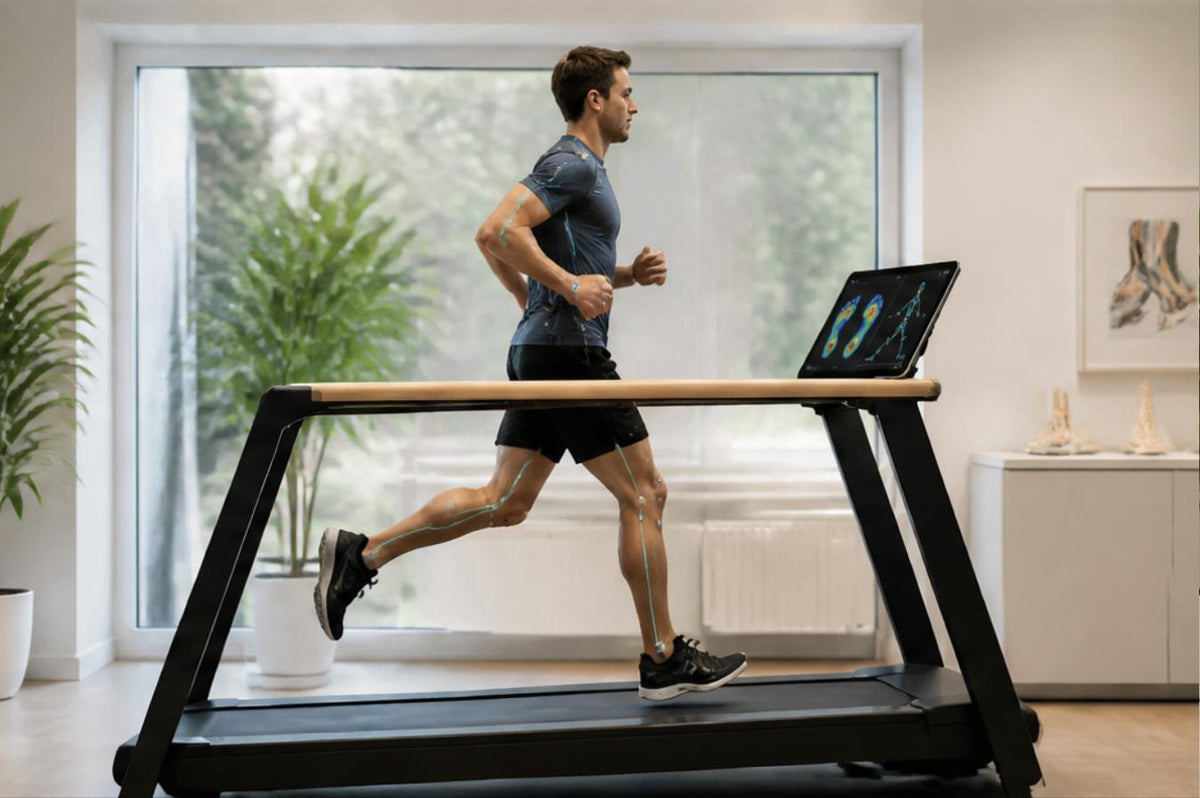
If you play football regularly and are managing a lower limb condition, we strongly recommend booking a Biomechanical Assessment at Foot HQ Miranda. We'll assess your gait, analyse your current boots, evaluate your playing surface, and prescribe an orthotic and footwear combination that keeps you on the pitch and out of the treatment room.
Frequently Asked Questions
Can you wear FG football boots on artificial grass (3G/4G)?
It's strongly recommended that you don't. FG boots have longer, harder studs that create excess joint pressure and significantly increase the risk of stud lock a primary cause of ACL injuries on synthetic pitches. They also wear down far faster on artificial surfaces. If you regularly play on 3G or 4G, invest in AG-specific boots. Our podiatrists at Foot HQ can advise which AG model best suits your foot type.
What football boots are best for plantar fasciitis?
For plantar fasciitis, look for boots with a removable insole (so a custom orthotic can be fitted), a firm heel counter, and adequate midsole cushioning. AG boots on synthetic surfaces and FG boots with conical stud configurations on natural grass are generally preferable to bladed or SG alternatives. Book an appointment at Foot HQ Miranda for a personalised assessment.
What football boots are best after an ACL injury?
Players with ACL history should prioritise boots with short, conical studs that allow the foot to release naturally during rotation, rather than gripping and transmitting torsional force to the knee. AG boots on synthetic surfaces and conical-dominant FG boots on natural grass are the safest options. Bladed FG studs and all SG boots should be avoided. Our sports podiatrists at Foot HQ can guide your return to football following ACL reconstruction.
Are AG boots worth it if I mainly play on 3G pitches?
Absolutely. AG boots are specifically engineered for 3G and 4G synthetic pitches they offer superior grip, a significantly lower injury risk, and a much longer lifespan than FG boots used on artificial surfaces. If you train or play primarily on synthetic turf, AG boots are the clinically and practically correct choice.
Can I wear SG boots on firm ground?
No. Metal screw-in studs are too long and rigid for hard ground. You'll feel unstable, risk plantar pressure injuries, and place dangerous forces through your ankle and knee joints. SG boots should be reserved exclusively for genuinely soft, waterlogged natural pitches.
Do I really need more than one pair of football boots?
If you always play on the same surface, one pair will suffice. But if you split time between natural grass and synthetic pitches which is extremely common in the Sutherland Shire having both an FG and an AG pair is the smart, injury-preventive choice. It's the same reasoning as wearing the right shoes for different activities: it protects your body and extends the life of your equipment.
Not Sure Which Boots Are Right for You?
Our podiatrists at Foot HQ Miranda are here to help — with personalised boot advice, biomechanical assessments, and custom orthotics for footballers at every level.

Share: